Thursday, April 9, 2015

Critical Questions to ask Mr Jimi Agbaje, and ourselves, before Voting him for Governor!

I read Jimi Agbaje’s piece titled My Conviction, and I almost thought I was reading an APC piece before the presidential elections. Jimi Agbaje has taken a 360 degree turn since GEJ lost, he told us to vote for him so as to align Lagos to the centre because he felt GEJ would win. When GEJ released billions of dollars for national and state campaigns to “mobilize” support for himself and PDP candidates, Jimi Agbaje told us GEJ had done well, deserved a second term, and Lagos deserved to be aligned with the center for accelerated development. He told us Nigeria will shut down if GEJ is not returned elected.

APC used the same Lagos-Abuja alignment strategy for both Ambode and Buhari's campaign, and they have maintained their ground, while Mr Jimi Agbaje has been speaking in a dishonourable manner from both sides of the mouth. Now that GEJ has lost, JK is telling us that Lagos does not need the center, and that he is separate from the PDP. JK is an intelligent man who is ready to say and do anything, no matter how ridiculous, to win elections. We must reject double speak!

JK claims to be independent minded. It shows his shallow understanding of multi-party democracy,a fundamental component of which is party supremacy. Besides, how can Mr. Agbaje boast of being independent minded when he was rigged in as candidate in a brutal display of shame of a party primary, while he looked on helplessly and basked in the europhia of such rape on democratic tenets, where the minority was greater than the majority? An everlasting PDP doctrine that has been repeated at the Governor’s forum elections where 16 was greater than 19, Ekiti state National assembly saga where 7 was greater than 19, just to mention a few.

How does JK intend to repay his financiers and those who defied all democratic decorum to rig him in? Now that PDP has lost the center and Obanikoro can no longer be compensated at the center as promised, will he also fall back to Lagos for compensation? And is it with the same funding that the APC government is generating from the same taxes JK has promised to reduce?

Mr JK, how do you intend to reduce personal income taxes, when it is the prerogative of the National assembly and President? Do you even understand the Nigerian tax system at all? Why promise to un-ban Okada when Okada was banned in major PDP states and Abuja way before Lagos effected its partial ban? Is this another vain promise?
If you are now distancing yourself from the PDP, how do you plan to govern efficiently in a disgruntled political platform? Or do you intend to also decamp since your double speak has shown you have little regards for honour? Should a honourable politician be hobnobbing with an ex-convict, even as his godfather?

If from your write up, you have admitted the APC government has done well even without federal support, don't you think they will do better now that the same ex-APC governors, who drafted the governance model and plans for Lagos, and know where the shoe pinches in Lagos, are going to be part of the government at the center? Should we sacrifice this promising future for your mostly impractical promises?

Besides, why did JK blatantly declare outbreak of violence and insurgency, and a system shut down if GEJ looses, saying it was the only way Nigeria could peacefully progress, and now turnaround to ask for a peaceful relationship from GMB's government if he wins? Thought you had no faith in the continued peaceful existence of Nigeria without GEJ?
I advise all Lagosians to take a sip of water, and critically examine this man called Jimi Agbaje, before buying his sweet-talk hook, line, and sinker!

JK is PDP, especially now that they have lost the center. PDP needs Lagos as their new cash cow since Abuja is gone. Bode George needs a new NPA and a new avenue to access public treasury. All other PDP cabals need Lagos as their last hope to fall back on. Bola Tinubu isn't perfect. But the APC has a tested governance model that is functioning and has been largely commended. PDP has none, and is full of hawks and sycophants who ruined President Jonathan’s administration and will come back to Lagos to feed fat and take us back 16yrs!

We pray that doesn't happen. This is the closest we've ever been to Lagos-Abuja governance alignment. And a Lagos government in collaboration with a Buhari-Osinbajo led federal government is way better than a government under the same bandwagon of leadership failures we chased out from Abuja.
God bless Lagos!

Saturday, December 7, 2013

The Crucifixion of Ogbeni Rauf’s Education Policy and the Myopia of his Crucifiers

While I must agree that some components of the reclassification policy recently embarked upon by the Aregbesola administration in Osun state are not "well-suited" for the cultural realities of Osun state (and by extension Nigeria), I feel we should not crucify the policy in its entirety, especially from a largely biased and myopic point of view as most of his critics have been.

It is degrading that some Nigerians have attempted to reduce a holistic policy into Religious and political sentiments. Such writers and speakers are quick to condemn the so called merger of same-sex schools with mixed ones, and termed the merger as “islamization of Osun schools”. Really, how ridiculous can this be?? How can schools that belong to the government, and therefore secular, be referred to as Christian or Islamic schools? And where in the world has it been proven that children in same sex schools perform better than their contemporaries in mixed schools? In fact the American Department of Education has established that single-sex classrooms or school environments does not guarantee success in education, but educational success is dependent on other factors such as good learning environment and instructional materials (which is what I believe the Educational policy is aimed at putting in place).

When are we going to stop being holier than Jesus and more Muslim than Prophet Muhammed in Nigeria? And who says those are the only components of the education policy? For example, the introduction of the Yoruba culture and Ifa-knowledge as an optional subject and degradation of religious studies from compulsory to optional is a good thing for promotion of our cultural legacies. I believe that the Harvard designed "opon-imo" is the climax of the policy and an excellent revolutionary initiative in our educational system.

Such initiatives have been experimented even on children of the most remote societies in Africa, and have been seen to be an amazing stimulant of learning. For example, the UN-Backed One Laptop Per Child project (OLPC), has distributed more than two million low-cost laptops in 42 developing countries in the last seven years and has recorded several success stories (Please read on their experience among some Ethiopian children, who learnt to read the English alphabets within months and sing unaided with such devices). Just recently, Opon-Imo was recognized as one of the best 4 e-learning devices across the world by the United Nations-backed World Summit Award Global Congress on E-Content and creativity. I believe it will do us no good if we focus on the limitations (such as electricity, low-skilled teachers, etc.) and brood over the demerits (everything has one), rather than take advantage of the unprecedented opportunities provided for the children to learn, with access to over 50 textbooks including the Bible, Quran, and Opon Ifa, without spending much (as most public school children are less-privileged than their private counterparts), and platform for exposure to the use of technology.

I agree Ogbeni should immediately review some of the components of the policy to forestall violence in the once peaceful state, however, I also believe he should expand on some of his policies especially as regards curriculum content, construction of modern schools and reclassification into elementary, middle, and high schools; the free school feeding program (an age-long stimulant for school attendance), etc. other components like the merger of same-sex schools with mixed ones, eradication of religion-based divisions in schools, etc can be re-worked after further consultations with relevant stakeholders. But these policies should not be ridiculed with religious and political sentiments please. God be with Nigerian school children!

Tuesday, August 27, 2013

The Truth about Igbos. And the Rantings of a Hypocrite!

Having survived this long in silence over this FFK-Kalu hullabaloo, the discussions I had with friends on my Facebook page made me give up my resolve to remain quiet. I have followed FFK's writings for months, and I have to repeat that I am yet to arrive at a better word for his writings than "ramblings". He swings from blind spiritual extremist views in calling Obama the antichrist who should not be voted for, to cultural extremism by over generalizing one man's comments into an ethnic and uncalled-for outburst. I also believe it is disrespectful for a former minister and presidential spokesperson to call the comments of a former governor "unintelligent rubbish", and I owe such a man no respect. While I agree that Orji Uzo Kalu went beyond bounds in labeling Lagos a "no man's land", and insulted the collective heritage of Lagosians, and by extension, the Yorubas, I still believe strongly that Fani Kayode's response was utterly irresponsible.

A country's greatness and strength lies in recognizing differences and working together to build them, but greater strength lies in respecting the sensitivities and ethno-religious fragility of your countrymen, and striving to respect individual and group differences in culture and religion. While some of us are advocating for a true federal system, where ethnic leanings will be held secondary and competence and integrity upheld as the main crux of leadership, Fani Kayode attempted to open old wounds with snide references to the pogrom and civil war, publicly condemning an entire Igbo race in a classic case of sheer fallacy of hasty generalization, and then attempting to grossly undermine the contribution of millions of Igbos to the socio-economic development of Lagos.

I believe Fani would have done excellently well if he had taken on Kalu on his words and blasted him in return, infact, he would have gotten sympathy from even some Igbo kinsmen. But defending Lagos by undermining the history of a major race? In a culturally sensitive polity?? How does that translate to being a responsible statesman and public figure??? Was Fani not singing Obasanjo's praises when he withheld the Lagos funds for two years?? If he loved Lagos that much, how come he was running his mouth so loudly against "perceived Obasanjo enemies in Lagos"??, and participated in a government that was committed to running Lagos aground?? Please Fani cannot succeed in deceiving people like us with his sheer hypocrisy and desperate quest for relevance. He was almost worse than Abati in his days as the presidential parrot. We have not forgotten so fast. It’s time we started ignoring people who had decades of opportunities to make a difference, did nothing but enjoy the spoils of government, and then attempt to further plunge us into crisis when they get booted out of government!

I think we should break this down into tiny basic bits of rhetorics, so as not to get lost in all the barrage of historical banters, let’s look at it this way; we can all agree Kalu went overboard with his comment, and deserved to be “educated”, but after then, what next? Is it not a major feature of mega-cities to downplay indigeneship and promote diversity even while preserving cultural heritage? Was this not why and how Hilary Clinton could become a Senator from New York despite having never lived there, and offered “New Yorkers” unprecedented legislative service? Didn’t she become a New Yorker herself?

Now, to Lagos and the contribution of Igbos, or say, others generally, Can the south west singularly maintain the diverse market opportunity Lagos provides to potential and forever courting investors? Could the south west have fed Lagos with the economic boom and mega status it enjoys all alone? How many cities in the world of Lagos’ status attained such with culturally parochial mindset? Is it New York? Bombay? Tokyo? Shangai? Seoul? Delhi? Mumbai? A first glance at those cities will show how much all of them have one thing in common; their openness to diversity and accommodating culture, where legitimate immigrants can come in, belong, and contribute to economic growth. We all know that the contributions of the Sage Obafemi Awolowo to south west development cannot be underplayed or matched by any other statesman
(I stand to be corrected), but again, after then what? If the south westerners were such geniuses at single handedly feeding cities with mega population and turning them around to socio-economic hubs, then why has Ibadan, despite all Awo’s efforts, gone to sleep? Where is Abeokuta in the hierarchy of commerce? Then Akure, Ife, Ijebu, Oshogbo, Ilesha, Idanre, Akoko and many others? Why have they not all become another Lagos? Truth be told, NO MEGACITY ever REMAINS solely for indigenes, except it chooses to sacrifice such status, not even Kano’s economy was developed solely by Northerners, how much more almighty Lagos. So Fani’s claim that “…The Igbo had little to do with the extraordinary development of Lagos between 1880 right up until today. That is a fact. Other than Ajegunle, Computer Town, Alaba and buying up numerous market stalls in Isale Eko, where is their input?..” is totally baseless and is borne out of either sheer prejudice, intentional hate, or outright ignorance, which puts to question his so called “sound Cambridge historian” intellect. He even goes ahead to insult our intelligence by calling it a fact!

Have we also considered that a Wole Soyinka, Tunde Fashola, Bola Tinubu, Femi Okunnu, and many others with more direct stake, if they responded to Kalu, would have done so with deeper maturity? (Based on antecedents, your choice to disagree), if you agree, would this not be because they are probably more socially responsible? Would FFK have also said these exact things if he was still in government or position of responsibility? In plain terms, Fani-Kayode’s ramblings are purely hypocritical and irresponsible!
Having said that, I believe the true Lagos Igbos know and appreciate the fact that Lagos is NOT a “no-man’s” land, that is why there is an Eze-Ndigbo, who pays homage to the Oba of Lagos, that is why there are white cap chiefs, and traditional Lagos families like Kosoko, Dosunmu, Oniru, Etti, Olumegbon, etcetera. But then, I think the Igbos also have the right to ask for a sense of belongingness in a city where they are an integral part of socio-economic activity. For God’s sake, even Lebanese and Chinese lay claim to being “Lagosians”! Does that also mean they want to reclaim Lagos from the Oba?? Absolutely No! But that is the beauty of a city like Lagos, diversity and openness.

So therefore, our focus should be on educating the Orji Kalus of this world, putting them in their rightful place on the mat (where other respected statesmen sit on high tables), and shutting them up with more civil write-ups! Not ego-filled and boastful claims of intellectual astuteness like Fani-Kayode, when his so called writings lack depth and defies basic understanding of economics and sociology, talk less of history, and attempt to further fan the embers of ethnic hate by opening old wounds and insulting an entire race.

Long Live Lagos. And long live Nigeria.

Wednesday, March 6, 2013

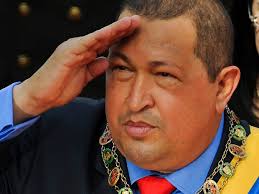
My Personal Ode to HUGO CHAVEZ: A Lesson for Africa, A Shame to "American Consensus"!


In as much as I am an ardent believer in Modern liberalism, representative democracy, and free market economy with not-more-than-neccessary government intervention as the best forms of social, political and economic ideologies. I cannot however deny my admiration for Hugo Chavez and his socialist policies.
The lifes and times of Hugo Chavez should be a great lesson to many other leaders in the world, especially Africa, where the priority of myopic leaders is to enrich their pockets, impoverish their people, create illiteracy, hunger, and sacrifice their countries' future on the alter of pro-Americanism.

Africa is blessed, or cursed with mediocre leaders who are quick to satisfy western egos, enrich western economies with our oil wealth, and invest in production and capital in the west with stolen money from mother Africa, all at the expense of their people's posperity and even right to existence.

From Mugabe, to Mobutu, Idi Amin, Sanni Abacha, Gnassingbe Eyadema, Robert Mugabe, Modibo Keita, Olusegun Obasanjo, Ahmed Sekou Toure, Ibrahim Babangida, Omar Bongo, the list of African tyrants goes on and on and on. Individuals unworthy of leading small groups have assumed national leaderships in Africa, and contributed to the abject impoverishment of their nations, turning the blessings of Africa's resources into her curses. These shameless rulers who spend all their time in power stealing unprintable amounts of wealth are always so quick to please western powers, until ofcourse they fall out of favour, and alas become toppled, murdered, or disgraced out of office through pressures from various quarters or the bullet.

Once upon a time when leaders like Hugo Chavez rise from small sized nations and leave their footprints on the hearts of mankind, friends and foes alike, we owe it to posterity to salute such men and document their achievements. Chavez displayed unprecedented courage in his anti western ideas, and proved to the world that nations can bring their citizens out of poverty without neccessarily acting as western "ass-kissers". Chavez questioned status quo in a largely uni-polar world order, and proved that  the "American consensus" approach to socio-economic policy wasn't always the best or only option to follow.

Despite an overwhelming influence on the people and the polity, Chavez conducted and won elections, introduced constitutional reforms and subjected them to referendum, and above all, he accepted the results of these processes.

While he is not a perfect leader, as no one is, we can safely agree that Chavez was able to shut the mouths of his most powerful western adversaries by delivering quality, measurable leadership to his ordinary citizens.
To make it simple, Hugo Rafeal Chavez bettered the life of his citizens, especially the poor.

Below are a summary of some of the achievements of this tremendously remarkable man.

1. REDUCTION OF POVERTY

During the administration of the Bolivarian Government led by President Hugo Chávez, the extreme poverty rate significantly fell from 42% in 1998 to 9.5%. This result allowed Venezuela to achieve in advance this UN Millennium Goal. General poverty was also significantly reduced, from 50.5% in 1998 to 33.4% in 2008.

Venezuela's Human Development Index also increased from a 0.69 (medium development) in 1998 to 0.84 (high development) in 2008. Currently, Venezuela ranks 67 out of 179 countries according to the 2008 UNDP report.

Venezuela's Gini coefficient fell to 0.4099, the lowest in the country's history and in Latin America. In 1998 it was 0.4865.

2. ACCESS TO EDUCATION

In 2005, Venezuela achieved the goal set by UNESCO to declare a country an illiteracy-free territory; 96% of adults and elders know how to read and write. But we are still working and 99.6% of the population over the age of 15 is now literate.

Currently, the Venezuelan state spends 7% of the GDP on education, compared to 3.9% of Venezuela's GDP in 1998. Without including the socialist missions (social programs), school enrolment was 6.2 million students in 1998; now it is 7.5 million students both in public and private schools.

The socialist missions, created as an initiative of President Chávez to look after the population excluded from the formal educative system, show the following statistics:

a. Mission Robinson II: 437,171 students, including 81,000 indigenous students, have graduated.

b. Mission Ribas: 510,585 students have graduated.

c. Mission Sucre: 571,917 Venezuelans are in the higher education system in 24 programs (career), in 334 different municipalities. 30,000 students have graduated from seven programs: education, environmental management, social management of local development, journalism, management, computer science, and agro-food production.


3. ACCESS TO HEALTH

Venezuela invests 4.2% of its GDP in health and it continues deepening strategies to guarantee Venezuelans free access to health with the creation of the social programs Barrio Adentro I-II-III and IV. Up to 2009, Barrio Adentro has made the following achievements:

a. 24,884,567 Venezuelans, that is to say 88.9% of the population, benefit from this mission.

b. 630,491 Venezuelan lives have been saved thanks to this mission.

c. Barrio Adentro has inaugurated: 6,531 popular health centers, 479 Integral Diagnosis Centers, 543 Integral Rehabilitation Centers, 26 High Technology Centers, 13 popular clinics, 459 popular opticians and 3019 locations offering medical and dental care.

The public health policies developed by the Bolivarian Government have managed to reduce the children mortality rate (children under 5 years) to 13.7%. In 1990 this figure was 25.8%.

4. SOCIAL SECURITY

Unemployment has been reduced by 50% during President Chávez’s administration, falling from 12% to 6.1% by early 2009.

In May 2007, the Venezuelan minimum wage became the highest in Latin America (US$372). In addition, workers receive a monthly bonus for food amounting to over US$139. Also, pensions have been increased to the minimum wage.

5. ECONOMIC DEVELOPMENT

The Venezuelan economy has experienced 20 consecutive quarters of growth. The year 2004 stands out with an historical growth of 18.3%. The 2008 rate of growth was 4.9%. Our economy has grown by 526.98% compared to the Venezuelan economy in 1998.

Venezuela has the fourth largest economy in Latin America after Brazil, Mexico and Argentina.

6. FOOD SOVEREIGNTY

In order to guarantee the country's food security and sovereignty, the Bolivarian Government created Mission Food, whose aim is to offer basic foodstuffs to the Venezuelan population at low prices and without intermediaries. This initiative materialized with the creation of a network of storing centers and stores (Mercal, PDVAL, ASA, FUNDAPROAL, and silos, among others).

In 1998, Venezuela produced 16,272,000 tons of vegetables. By 2008, Venezuela managed to produce 20,174,000 tons of food. This represents a 24% increase.

7. PUBLIC DEBT

The public debt dropped from 73.5% of the GDP in 1998 to 14.4% in 2008, placing the national deficit as one of

the lowest in the World.

In 1998, a debt of $3 billion was paid off to the International Monetary Fund (IMF) and to the World Bank (WB).

8. INTERNATIONAL RESERVES

By early 1999, the International Reserves amounted to US$14.3 billion. In January 2009, they amount to US$41.9 billion.

9. TECHNOLOGY SOVEREIGNTY

Before the Bolivarian government, there was practically no investment in science and technology. Today, 2.69% of Venezuela's GDP is aimed at science and technology.
With the creation of the Infocentros (centres of information) and the National Technological Literacy Plan, the access of the population to

information and communication technologies was boosted.

On October 29, 2008, Venezuela launched the Simón Bolívar Satellite from the Sichuan's Satellite Center in the People's Republic of China. It is operative and the Venezuelan state has taken control. Satellite services will be offered to thousands of communities all around Venezuela, and beyond our borders in other Latin American and Caribbean countries, with tele-education and telemedicine programs.

The consolidation of Venezuela's technological sovereignty also includes the nationalization of the main, strategic, telephone company, Venezuela's National Company of Telephones (CANTV, Spanish acronym).

10. ELIMINATION OF GENDER INEQUALITY

Gender equality adds to the achievements of the Venezuelan society. Women’s participation in Communal Centers is 60%; 4 out of the 5 Public Powers are headed by women. The women's presence in the National Assembly (Venezuelan parliament) increased from 10% to 16.5%.
(The 10 points enumerated here are Excerpts From the Venezuelan solidarity campaign)

A good study of Chavez's life will show the painful obvious fact that some of us will gladly sacrifice our leaders for a day to have the leadership styles of Hugo Chavez!

Rest in Peace the "Bolivarian" General!

(Ayo Bankole Akintujoye, Lagos Nigeria, March 2013)

Tuesday, March 5, 2013

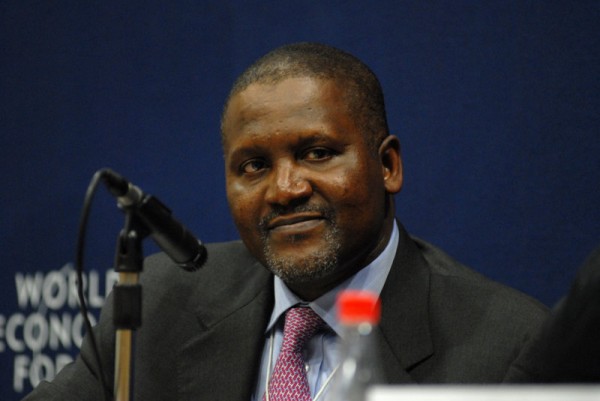
EXCLUSIVE NEWS: Dangote Now World’s 43rd Richest Man


EXCLUSIVE NEWS: Dangote Now World’s 43rd Richest Man


With a net worth of $16.1bn as of March 2013, the President, Dangote Group, Alhaji Aliko Dangote, has moved up in the latest world richest ranking to number 43 from 76 in 2012.

According to the list which was released on Monday by Forbes, Dangote and the Chairman of Globalom, Dr. Mike Adenuga were the only Nigerians on the list.

Dangote, 55, however, retained his position as the richest man in Africa and the richest among manufacturers in the world with a net worth of $16.1bn.

Adenuga, 59, on the other hand, ranked 269 on the list with a net worth of $4.7bn.

The world billionaires, list presented Carlos Slim Helu, a Mexican as the world richest man with a net worth of $73bn, while Bill Gates of United States came second with a net worth of the $67bn.
Others are Armancio Ortega of Spain ($57bn); Warren Buffet, United States ($53.5bn); and Larry Ellison of US with $43bn net worth, coming third, fourth and fifth, respectively.

Forbes said, “To compile net worths, we value individuals’ assets, including stakes in public and private companies, real estate, yachts, art and cash – and account for debt.

“We attempt to vet these numbers with all billionaires. Some cooperate; others don’t. We also consult an array of outside experts in various fields.”
The past year has been eventful for Dangote. In October, he sold off a controlling stake in his flour milling company to Tiger Brands of South Africa and pocketed $190m in cash.

In February, his Dangote Sugar Refineries acquired a 95 per cent stake in Savannah Sugar in a bid to maintain its dominant position in the Nigerian sugar industry.

Dangote started building his fortune more than three decades ago when he began trading in commodities like cement, flour and sugar with a loan he received from his maternal uncle.

He delved into full production of these items in the early 2000s and went on to build the Dangote Group, West Africa’s largest publicly-listed conglomerate, which now owns sugar refineries, salt processing facilities and Dangote Cement.

Source: Punch Nigeria

Friday, March 16, 2012

Student Unionism In Nigeria; The Past, The Present, and the Future


I made quite a number of adversaries in my university days because of my unwavering stand on student unionism in Nigeria and its consequent degradation. I always believed that the suspension of unionism in Nigerian institutions was justified and that a complete overall of unionist activities was inevitable.
Student unions had been hijacked by rascals and activism replaced with terrorism and cultism. In the days of civilized and vibrant unionism, student unions were known to effect major changes and influence government decisions through high level organized protests and demonstrations. In the hey days of the military and even years preceding it, Nigerian students and its leaders were an integral part of the pro-democracy struggle and were reputed to produce leaders of enviable intellect with a depth of national issues and strong diplomatic and negotiation skills with which they won most of the struggles with various authorities. Riots were usually the very last resorts and they were usually calculated and organized, with strategic agenda for the actualization of their demands.
One of such riots that easily comes to mind was the “Ali must go” riot in 1978. As chronicled by Taminu Umar in his paper “The Derailment Of Student Unionism In Nigeria” ‘...During the uprising many student’s lives were lost while agitating for the ouster of the then education minister, colonel Ahmadu Ali ... The “Ali Must Go”, riots like many in those days, was a landmark achievement by student unionism in Nigeria: it has opened up the eyes of our leaders to the fact that students knew their rights and can fight oppression no matter the intimidation...’
Student leaders were almost incorruptible and impenetrable! Those were the days when the fear of NANS was the beginning of wisdom for dictators and totalitarian rulers!
However, like every other spectrum of the Nigerian society, student unionism derailed…it came down so hard and so fast that there was a thin line, or no line at all, between terrorism, cultism, and unionism! In fact, renowned cultists became the determinants of who to become elected in union elections, and NANS congresses became characterized by clashes and cold-blooded murders.
The degradation not only applied to the make-up of the unions, it also had bearing on the modus operandi of “activism”. Intellectual activism died. And terrorist activism was born. Students began to engage in acts which brought to ridicule the whole essence of unionism and rubbished tertiary education as a whole. For example, a Vice-Chancellor of the University of Ibadan was “kidnapped” and locked up in the toilet of a male hostel for hours! In some other “alutas”, there were recorded cases were some Vice Chancellors were made to frog-jump for several kilometers! Student protests became synonymous with vandalism and thus contributed to the dearth in educational infrastructure, with little or no ideology and intellectual content in those protests; it was difficult, or almost impossible to articulate and communicate a clear set of actualize-able demands and thus, most protests only left behind tales of woes; deaths, vandalism, loss of academic calendar, etc and no real victory for the struggle.
At a brainstorming session with some selected youth leaders on the design of a strategic roadmap for educational advancement and youth empowerment, I accused the Ladoja government and politicians generally as being largely responsible for the derailment in education and student unionism. I also opined that the only way to reform and increase intellectualism among our students was to phase-out all unions and then build new ones with new attitude and enlightened leadership. The politicians were also to stop involving student unions in politics and buying out their future with bags of money. A large percentage of the derailment in the unions can be alluded to the student leaders’ exposure to government bribes and university authority buy-outs. This is responsible for sky-rocketing the desperation and violence at union elections.
This opinion still stands till today! A new union is inevitable, Nigerian students have no leadership as at today. NANS exists solely for the benefit of any government of the day, with former NANS president Kenneth Orkuma Hembe endorsing former President Obasanjo’s very unpopular third term agenda and even recently, NANS president Comrade Dauda Mohammed came out to support the removal of fuel subsidy!!! In his statement published in Leadership Newspapers of 19th January 2012, he said …NANS appreciates the courage of President Goodluck Jonathan in removing the fraudulent fuel subsidy and agrees in totality with the federal government on the inevitability of the removal. We strongly believe that the subsidy removal is a bold step in fighting the corruption that has defied all known accounting principle in NNPC…” It reeks of a totally conscienceless, bought-out and aptly corrupt union that lacks the ability to organize, articulate and defend the interests of students and youths.
We need to, as a matter of urgency, build a union that can mobilize students for world-class struggles as witnessed by students in Europe, we need to give birth to a union that can organize sit-ins and occupy campuses without bloodshed, a union whose democratic processes can serve as a benchmark and model for other democratic institutions, a union that can lay a framework for a generational shift in the Nigerian battered value-system and a union that can earn the respect of both school and state authorities. That is the future I desire for student unionism in Nigeria. So help me God.